
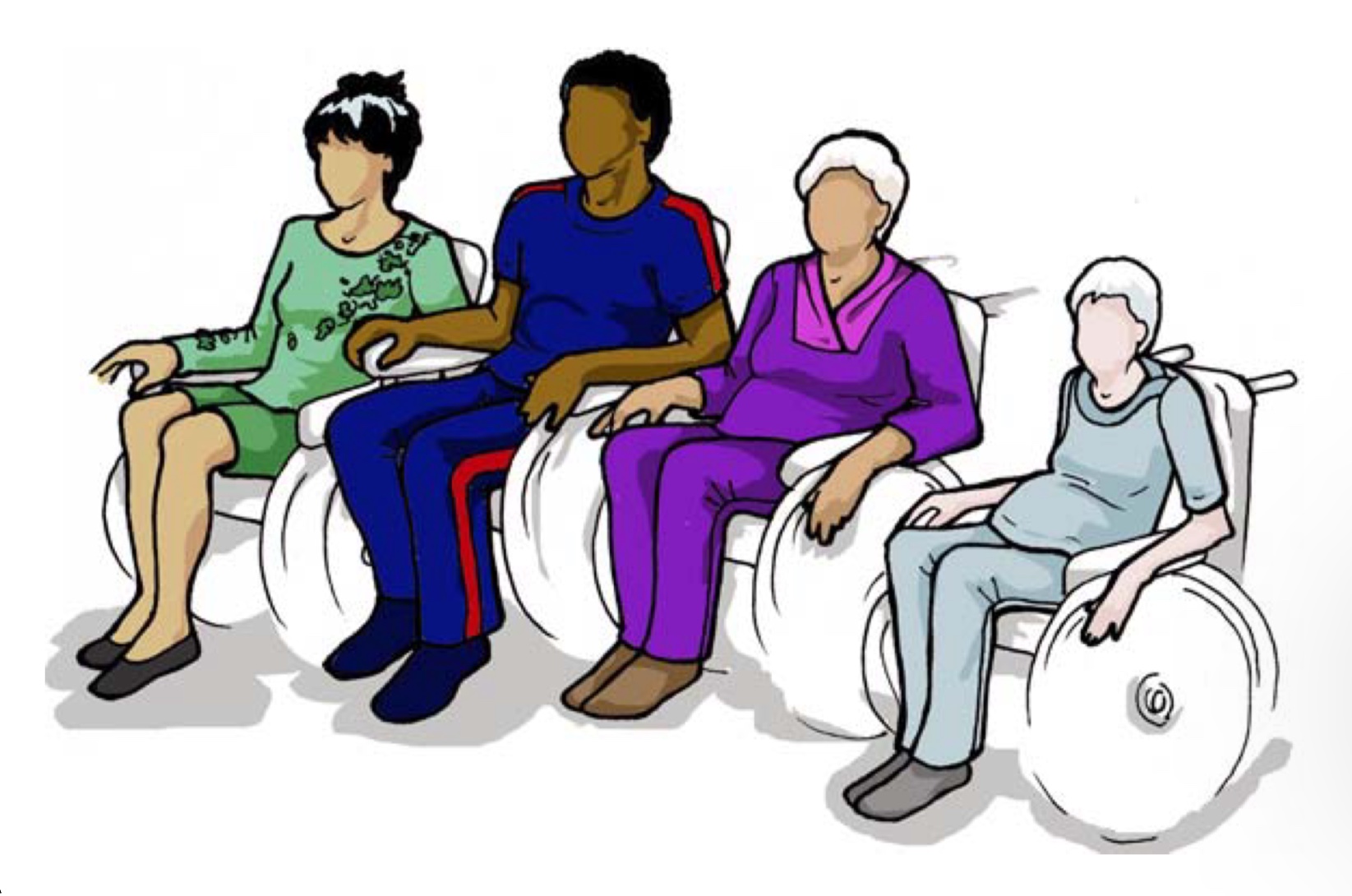
This is adapted from an article I wrote in 2010 for the national newsletter for our Association of Sewing and Design Professionals.
Young people need the same considerations as ancient men and women, though their skin may not be as fragile.
• Age/Flexibility/Balance/Muscle
Tone/Stamina
How healthy are they?
• How independent are they?
Are they still living by themselves? With family? In a care facility? For the latter, keep outfits as “assembled” as possible. If there’s a matching scarf, tack it to the garment’s back neck so it doesn’t get lost during laundering. Remember that many care homes don’t offer dry cleaning, and that care providers don’t have the time to fuss with a lot of details.
• Fashion vs. Comfort
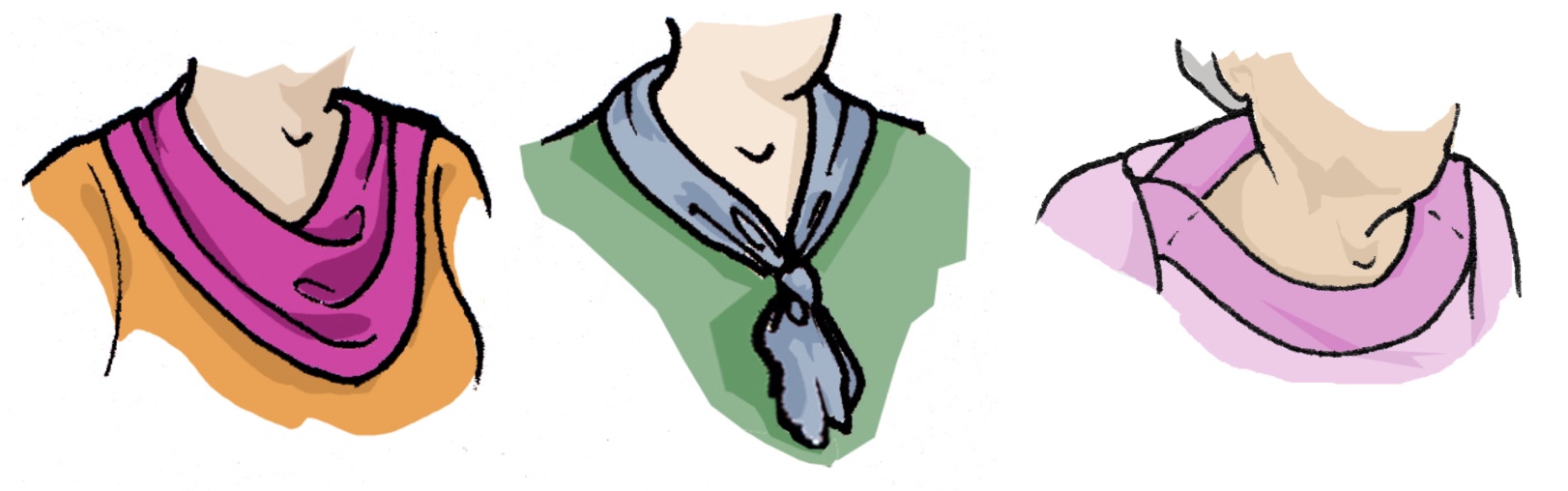
Many find the universal sweatsuits depressing. Don’t gauge anyone’s fashion sense by what they might be wearing at your meeting! Silk, if prewashed, can be attached to a garment (which can be laundered from there out: it will lose its sheen in time but still feel like silk) for a collar or tie at the neck of an outfit, or serve as a easy-to-grasp zipper pull. For a sports look, run satin trim or color blocking where it won’t chafe or interfere with their range of motion. What have been favorite clothes (occasion?) – color, style, fabric? Do they have a favorite team? My Nebraska Nana had a red outfit she wore on Cornhusker game days into her nineties. If they’re stuck, ask them what they hate and promise you’ll avoid those. Humor helps bonding, as does keeping your promises.
• Mobility
How’s their shoulder range of motion? Dexterity in their hands? Can they dress and/or undress themselves? Can they raise their elbows as high as their shoulders? How about their hip and knee joints, and leg strength? Can they manage their bathroom alone? A useful empathy exercise is to seat yourself beside a toilet. Cross your ankles and keep them together to mimic lack of stability. Now get your pants down and yourself transferred, Then reverse the process.
• Sensitivity/Lack of Sensitivity/Pressure areas
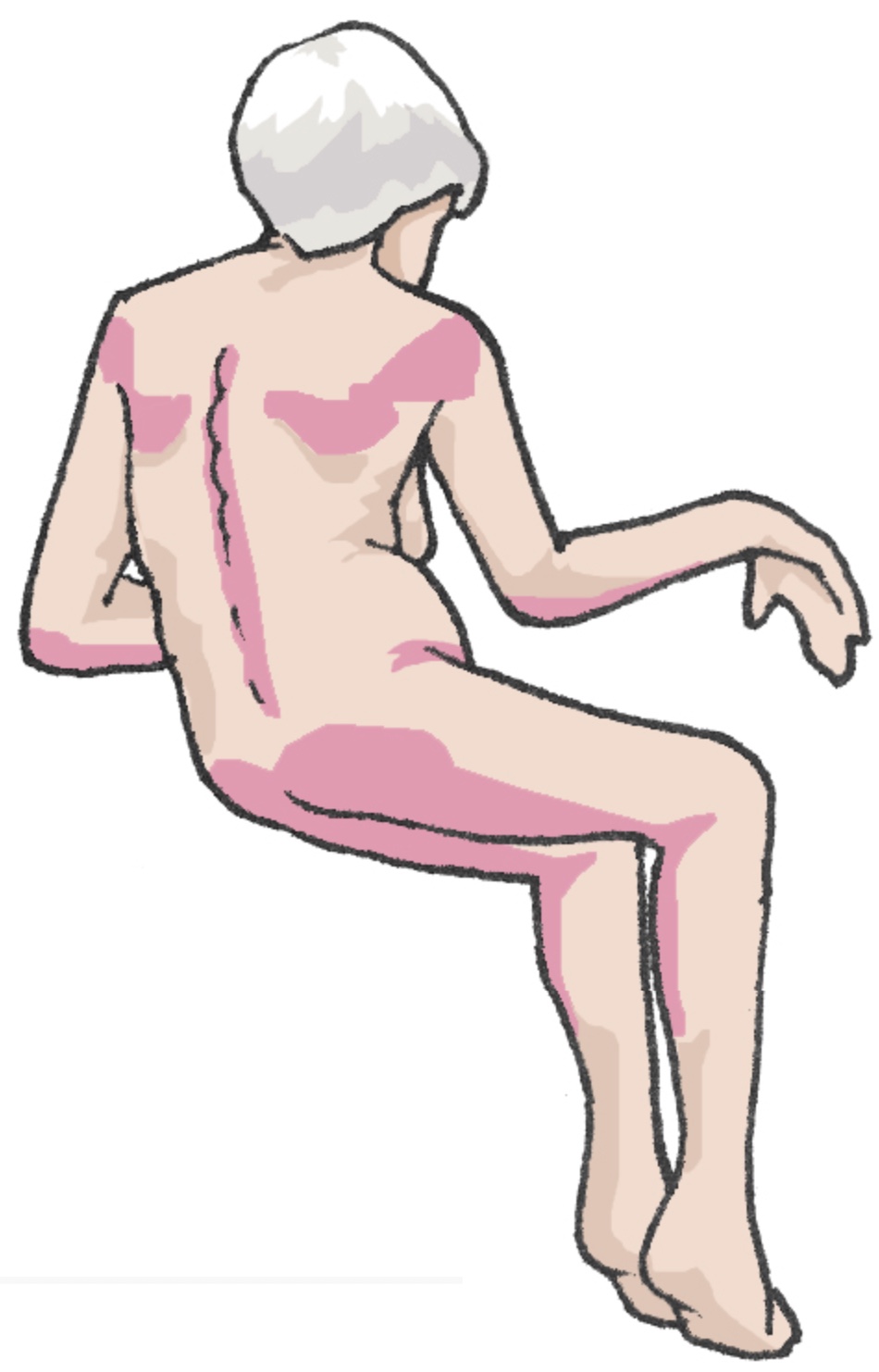
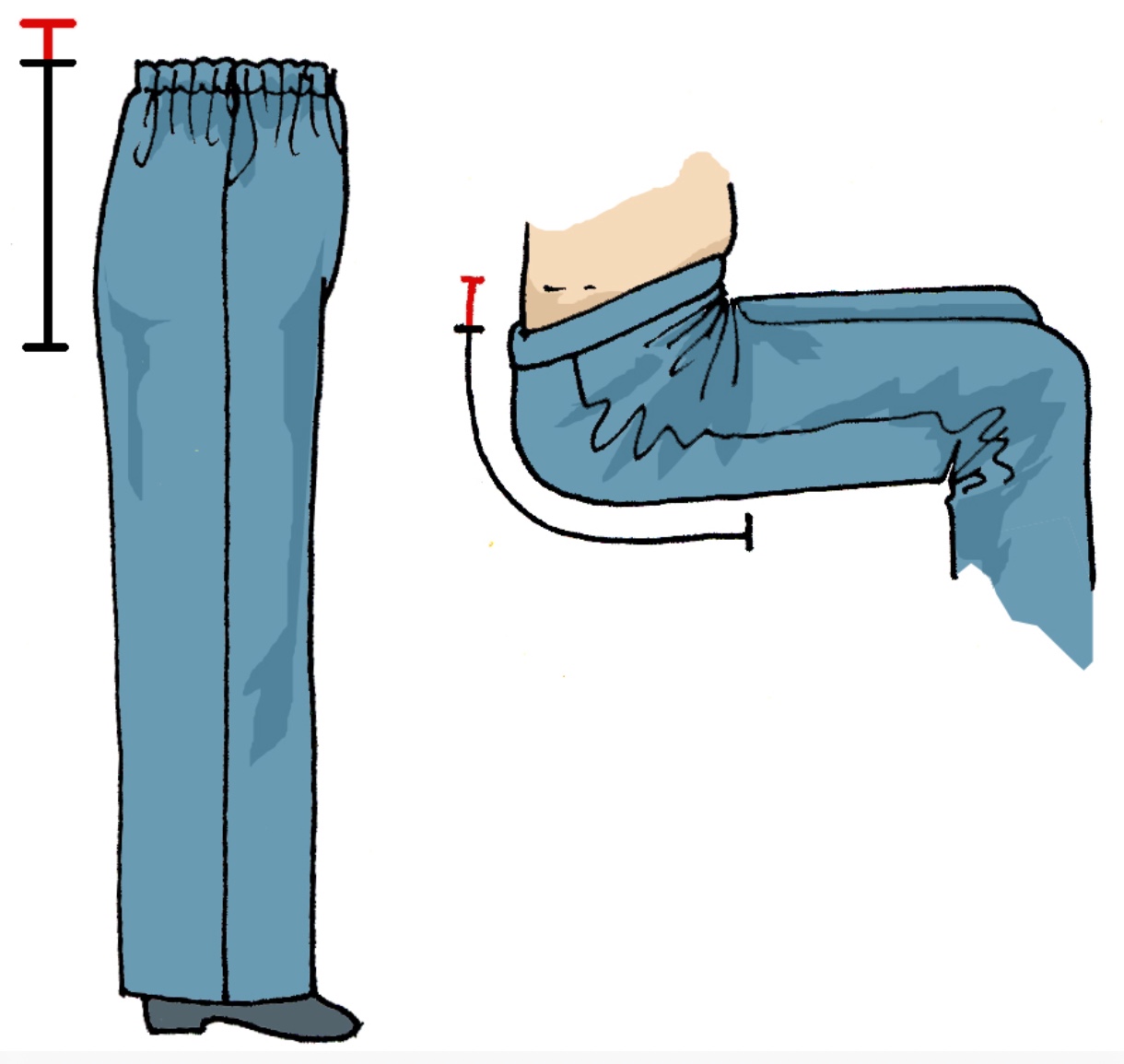
How sensitive is their skin? People who are in one position a great deal of the time are vulnerable to pressure sores from the weight of their body. Garments that are too tight restrict blood flow, garments that are too loose form uncomfortable wrinkles. Both can chafe. Keep the fabric as smooth as possible in the contact areas shown above. Be particularly vigilant for those with spinal injuries or other areas of limited feeling.
• Pain/Confusion
Schedule appointments when they’ve had a chance to wake up, get their blood sugar up, and for medications to have taken effect. “Discomfort” greatly increases confusion. Watch their body language to see if you’re talking or moving too fast.
* Closures
Don’t automatically reach for the Velcro, though the softer, more flexible kind has its uses. Unless carefully mated, it will attack anything else in the washing machine/dryer, and once it’s filled itself up with lint it won’t work well.
Move closures from the back or side to the front or side front.
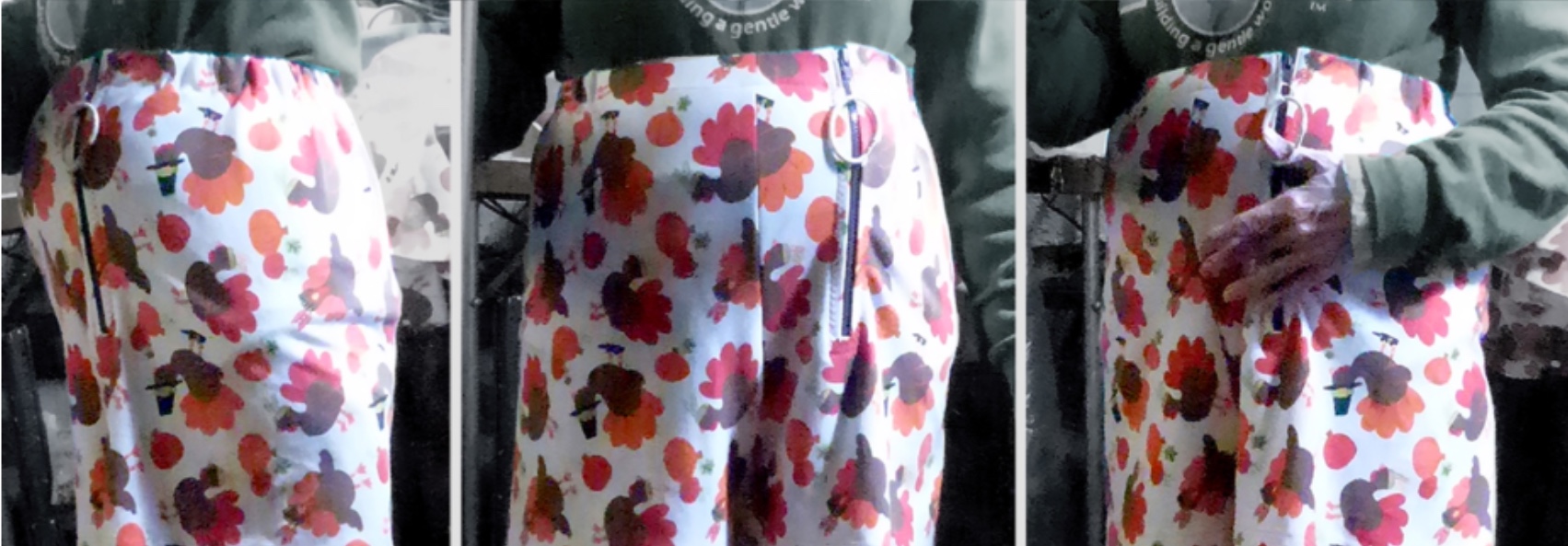
Oversized versions of zippers/buttons/snaps or hooks and eyes (the skirt/pants adjustable size type) or toggles may be enough easier to manage to return agency to the person, an important hidden agenda. The zipper pull above was an elastic hair tie, soft and easy to grasp.
If using ties, be sure the fabric is rough enough to grip itself and stay put.
Altering Pants or a Pants Pattern
If the client is asymmetrical, fit each side separately.
A person in standard pants needs to stand, sit, kneel, walk and (possibly) run. A person in a wheelchair needs pants that are possible to get in and out of without too much trouble and that are comfortable to sit in.
Pockets are difficult to get to when seated; better to eliminate them and instead make a set that attaches around the arm rest (watch that it won’t catch in the wheels or impede their use – put it to the inside if there’s room) or a backpack IF they can reach it.
Sew seams to the outside if they approve.
To create their pattern, start with reasonably comfortable existing pants and consider the following modifications.
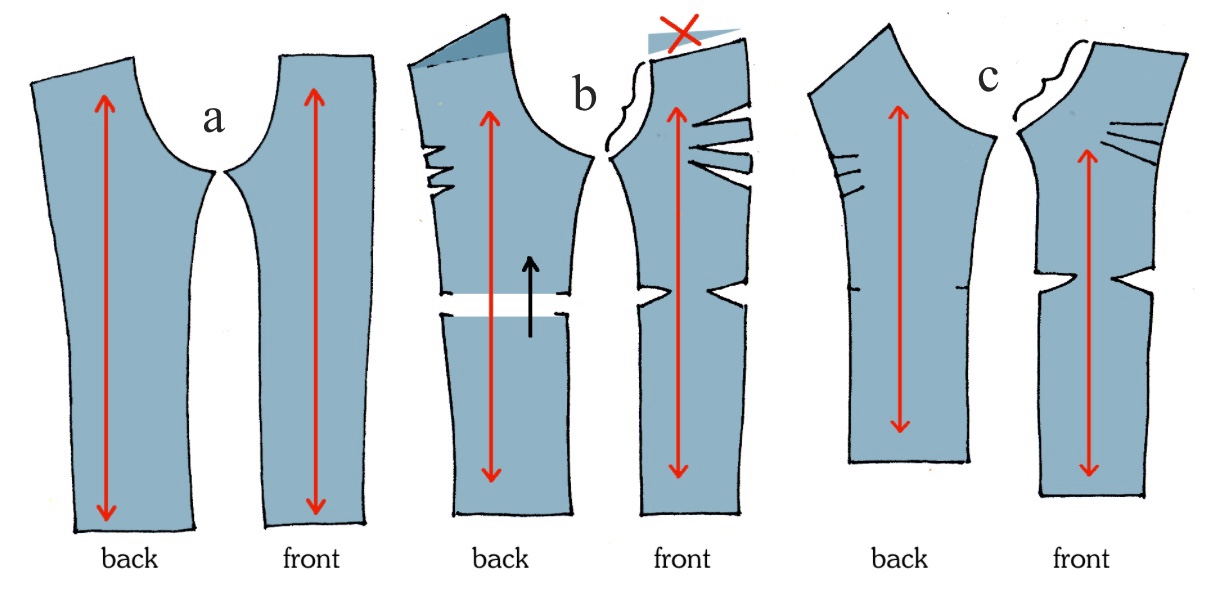
- Pants pattern(a) standard pants pattern(b) suggested modifications(c) corrected pattern
- Waist
The back waist length increases when seated, so raise the center back, the shaded area in (b). Lack of mobility often causes a poochy stomach, if so lower the center front. Be sure the waistband doesn’t cut into the body.
Hip darts
Pinch out the excess fabric formed where the legs meet the pelvis. Use small safety pins rather than straight pins for the fitting. It’s even better to quickly baste (with your other hand inside so you don’t poke them). This also makes sure you don’t get the pants too tight. Consider sewing the darts to the outside, topstitching, and whacking with a padded hammer to flatten.
Pleat out the excess across the front only if they’re slender and flexible, and be sure they can still get the pants up and down after your changes.
If the fabric has vertical stretch, you can close the front darts and stretch to fit the back at the side seams. This is the only place to ease; other seams should go together 1:1.
The front crotch (brackets) may tip but its length doesn’t change.
- Knees
Get rid of excess fabric as you did at the hips, except that you can take out the extra at the back as long as the legs stay wide enough for easy dressing.
These modifications will put quite a bend in the pattern pieces.
Altering blouses/tops or their patterns
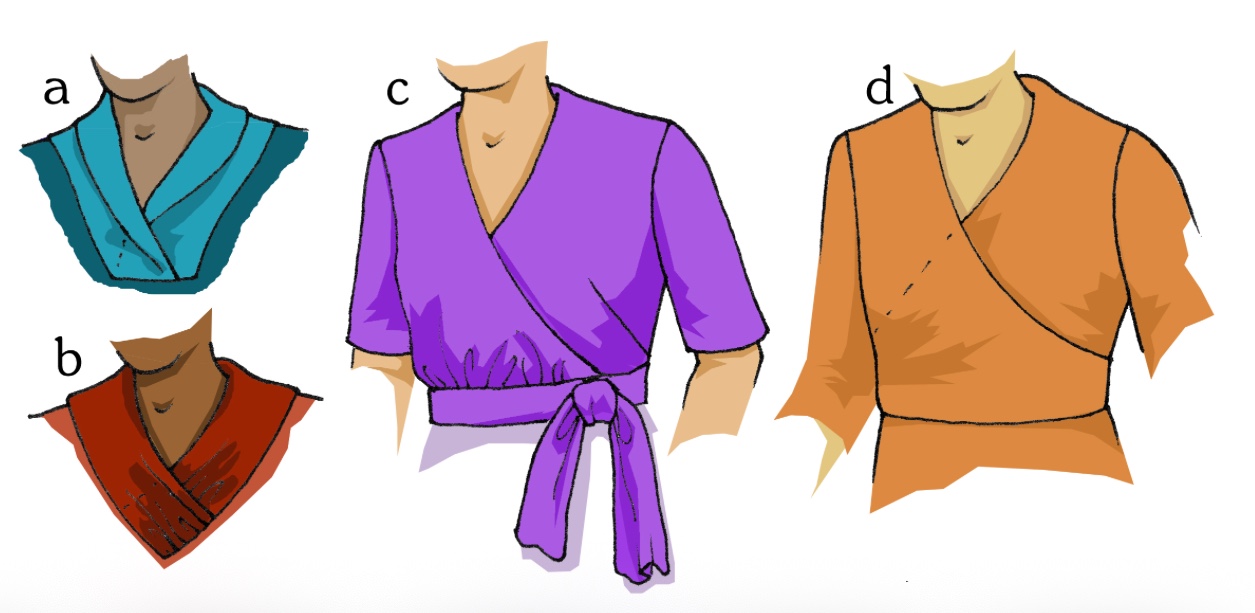
Collars that keep the neck warm yet don’t bind are preferable – choose a cowl or a wrapped inset over a turtleneck or crew.
(a) and (b) are wrapped collars that can be added to a t-shirt or sweatshirt pattern. The surplice (c) has a plain back and darted fronts. The tie needs to be moved from the side to the side front. Its sleeves cover the upper arms but stop short of the elbow crease. The wrap top (d) is not recommended as it tends to get twisted in dressing and is hard to straighten when seated in a chair.

This neckline, often seen on babies’ and children’s clothes, pulls open to slip easily over the head and lies flat once on. It’s a good choice for bibs (with a shallow upper back), particularly for dementia patients.
Remember that back closures mean the wearer is less apt to monkey with them, but may form a chafing lump that can damage fragile skin when they lean back against it.
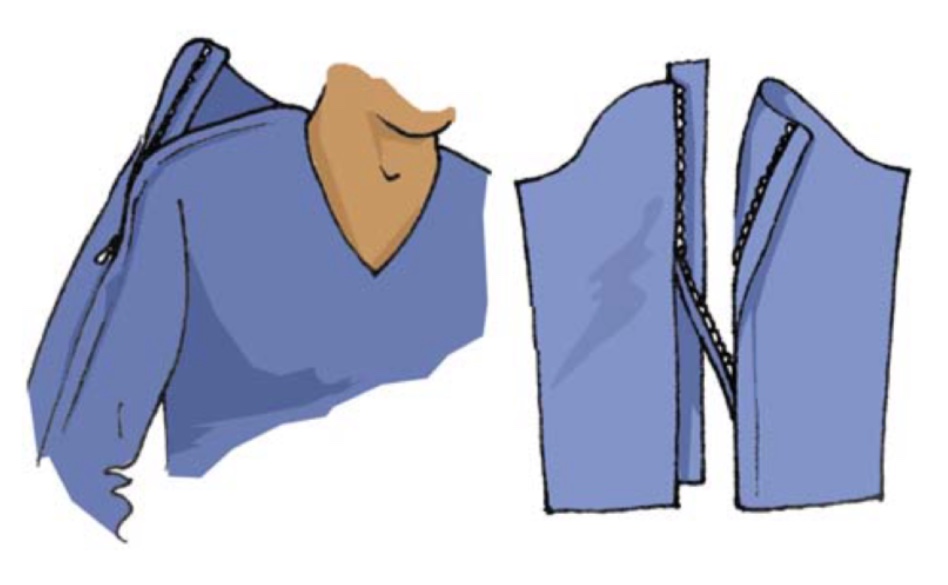
People with difficulty or pain raising their arms may benefit from zippers in one or both upper sleeves. Split the seam down the outside and run the regular or invisible zipper in it through the shoulder seam to the neck, opening to the top (the bottom of the zipper is best placed above the crook of the elbow, not the hem, and I haven’t shown it going through the shoulder seam in the partially-sewn graphic). Use a lapped application (to the back) and a self-fly.
Clothes laundered at care facilities are less apt to get “lost” if clearly labeled with their name in permanent marker. Buy some soft tape and make a bunch of labels. They don’t have to go at the neck: the hem works, too.
Most of these modifications are easier to build into the garments at the pattern stage, but it’s possible with a little ingenuity, to adapt ready-made garments.