
(or sergers, etc.)
Setting your machine(s) correctly takes time and attention, but you only need to do it once. This amalgamation came from others as well as my own research and experience, based on “Your body needs to be forming 90° angles”. The giant door stops for the optimal tilt came from Threads?
This friend is about 6” taller than I. The clumsily-modified old shots of her are at my serger, but the basics are the same.

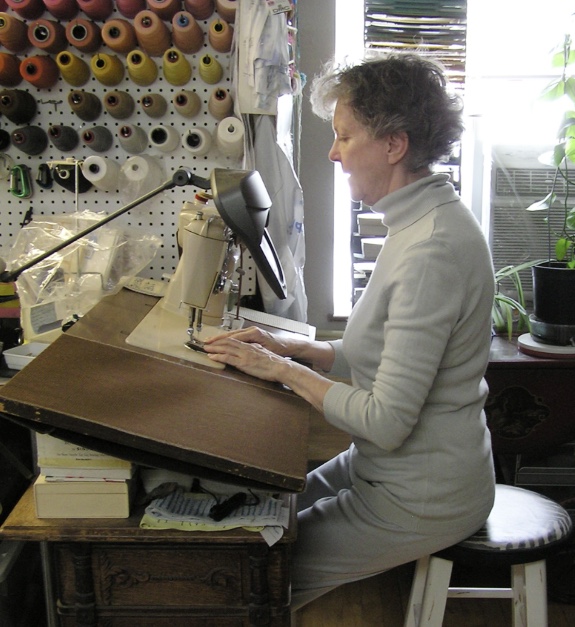
Raise the bed of the machine until your forearms make a right angle at your elbow. Use a kitchen anti-slip mesh or a rubber pad (whatever you pin into for blocking would work) to keep the machine’s vibration from walking it off into the bush. Putting other weight on the table – books? canned goods? – also helps.
Tip the machine towards you around 11°. This, with the increased height gives you sight lines past the machine head as well as an ergonomic body position. Before we rebuilt my treadle cabinet I had chunks of 2x6s under the back legs.
Whopping big door stoppers give you this angle. If you only buy a pair of these to start upgrading, you’ll be astonished at how much difference they make. The puny little ordinary ones aren’t big enough.

These door stops live in my portable’s case during transits to group retreats.
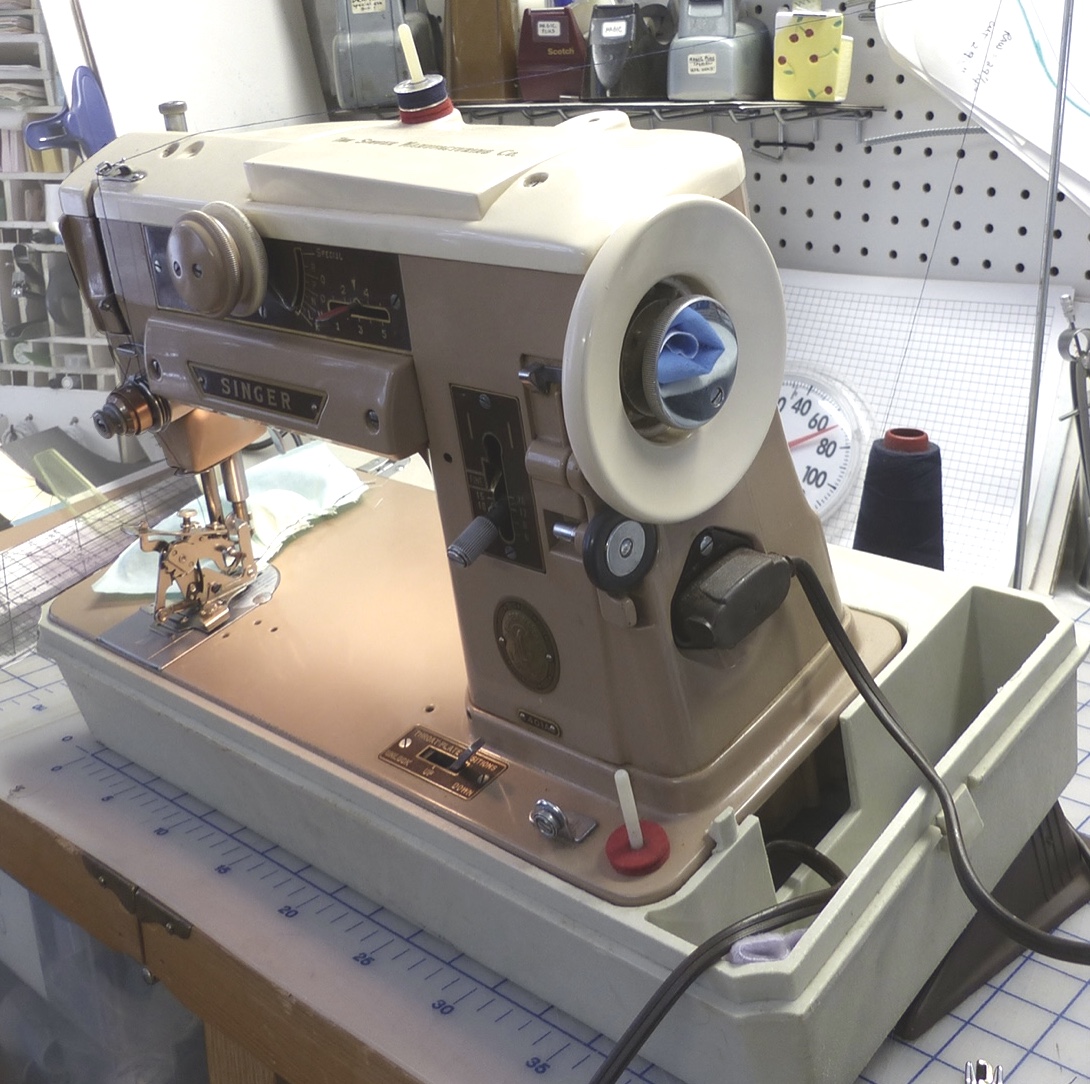
This was at standing height on one of my cutting tables!
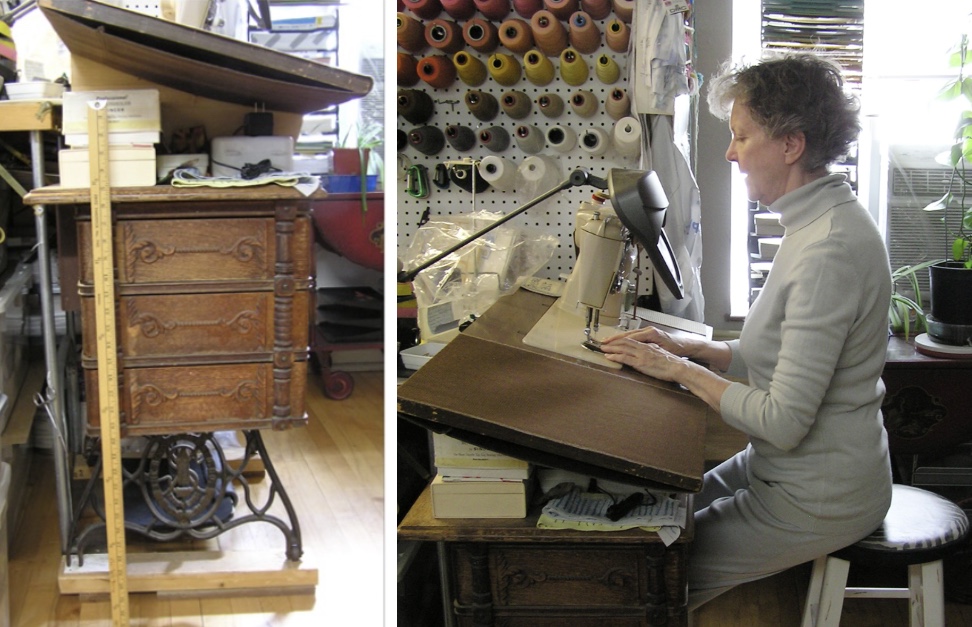
Courtney Willis (spouse of Connie) did most of the work to modify my treadle cabinet to my specs. Here’s how much we raised the bed. I am barely 5’. That’s the biggest magnifying lens/light I could afford (not turned on here).
Secondly, you need to adjust your position so that the needle is directly in front of you.
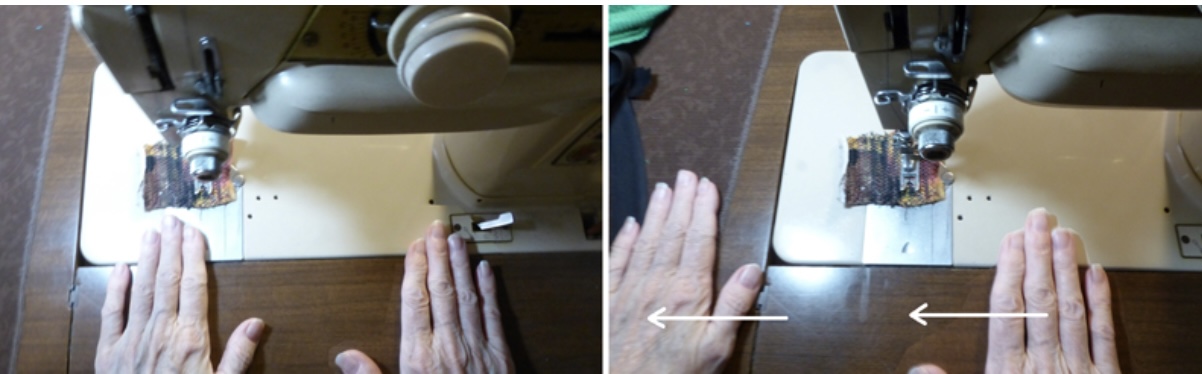
This solves the slight built-in torso twisting.
This was tricky modifying my treadle cabinet as the belt needed clearance, but we solved it.
During the early days of the pandemic before commercial masks became available, for most of the day I was sewing seated at my treadle or standing at my electric (I had a ruffler set up to pleat the bottoms of the masks). I got tired, but my body didn’t hurt.