
Patch pockets are a single layer of fabric sewn to the garment, traditionally but not necessarily the outside, rather than a bag with a front and back which is inset in the garment. Bags hold more and can be made of stronger fabric. A hand can slip into a bag more easily, convenient for the wearer but also for pickpockets.
Patch pockets can often be done as afterthoughts, which makes determining size and placement easier.
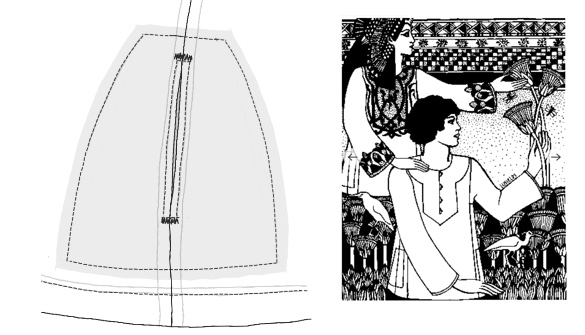
An example of a patch on the inside is from this Egyptian Shirt. Folkwear patterns expanded my world when I was starting to sew in Nebraska in the previous millennium. They remain well worth patronizing.
I searched out the pattern after drawing/writing it up and found that I’d changed the pocket’s shape and position/depth of its opening; the original was narrower with straight sides.
It’s vaguely trapezoidal, with curved sides, with the patch sewn to the inside and accessed through an open section of the side seam (it could be used instead of the inseam one below on pants or a skirt). I’d move it towards the front rather than center it, and catch the top in the waistband seam. It won’t hold much, but if all you need is a tissue and card or two, it would be fine.
It would be easy to add as an afterthought pocket. Whether you opened the waist stitching to catch the top edge or re-sewed it in the ditch would be up to you.
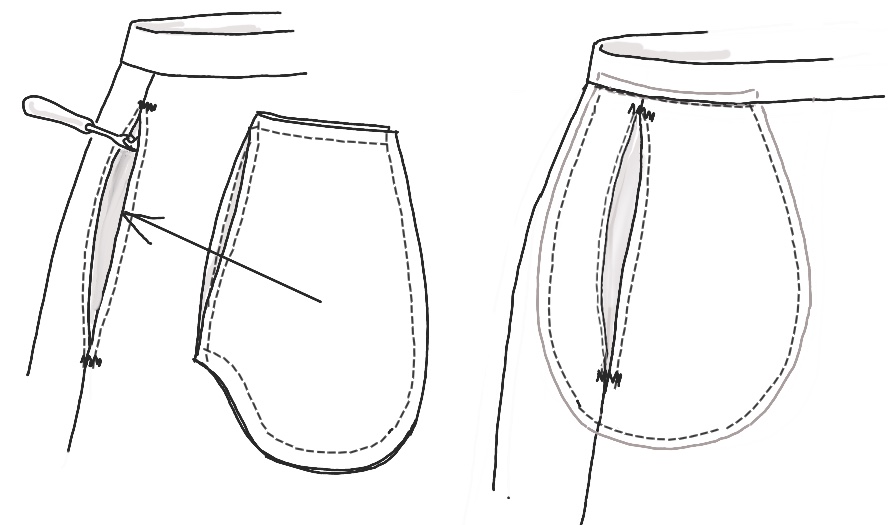
Left: the traditional bag, right: the inside patch. The back of the pocket is cheated back from the opening to reduce bulk at the side seam and make it easier to sew. You can shape your pockets any way you want.
This came from a lively discussion on Ravelry’s Team-Sew-My-Wardrobe thread, which began with the problems of a pocket cut onto the front and back of pants (or a skirt or top) with its bag turned to the inside.
Here’s the traditional pattern for pants (or a skirt) with side-seam pockets. If the pockets are teardrop-shaped and the garment has a seam at the waist, extend the top of the pocket to be caught in that.
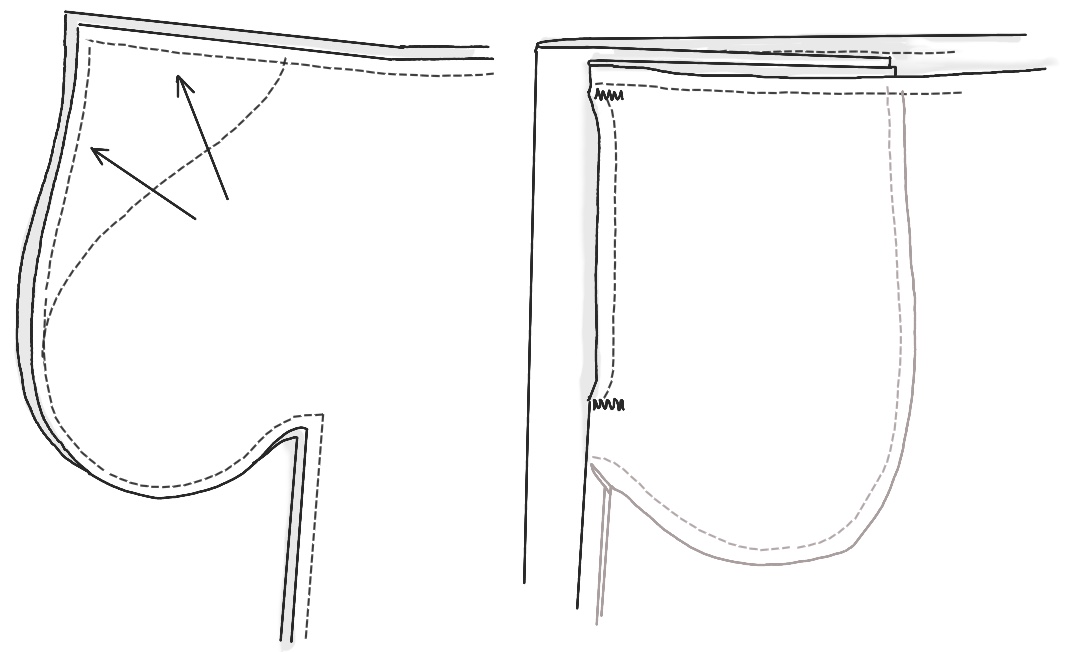
The bag is caught at the top and at the waist seam. It can have its bag sewn through the garment’s outer layer as well.
How about a single layer inseam pocket stitched through the front? It will take two pocket pieces’ less fabric. It’s sewn in the same order as a standard bag.
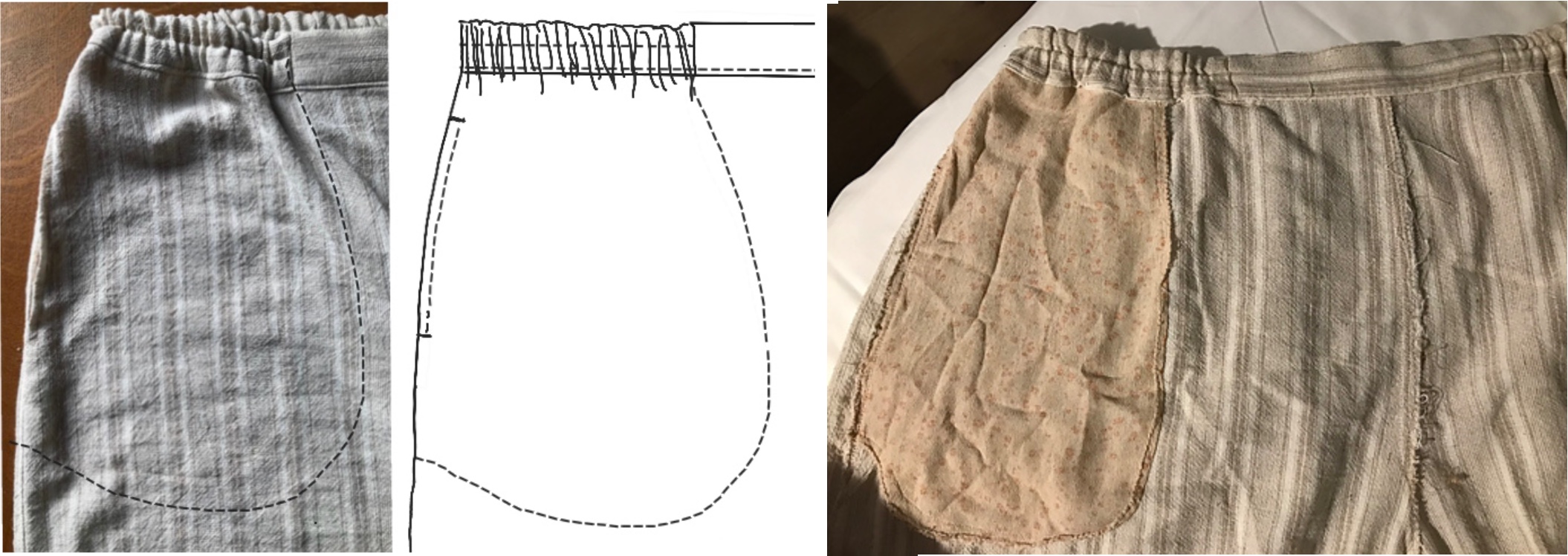
As with the Egyptian, it’s a patch pocket with the extra bit on the inside rather than on top.
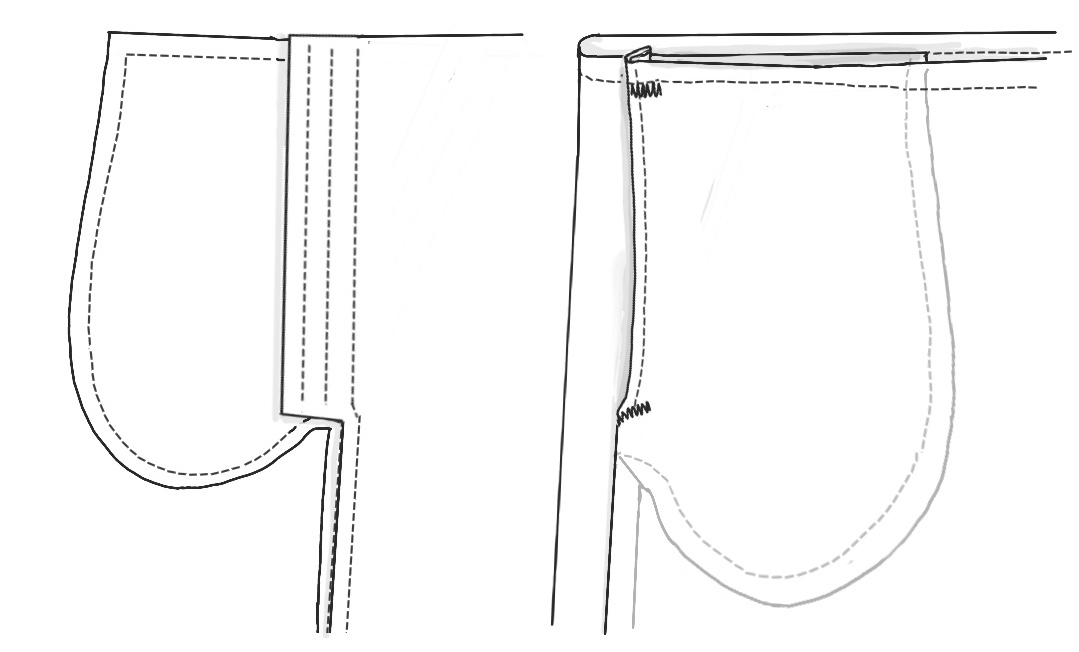
No change to the pattern’s back piece, where you’ve got the pocket sticking out; on the front there needs to be a rectangular extension to fold on itself to clean-finish the edge.
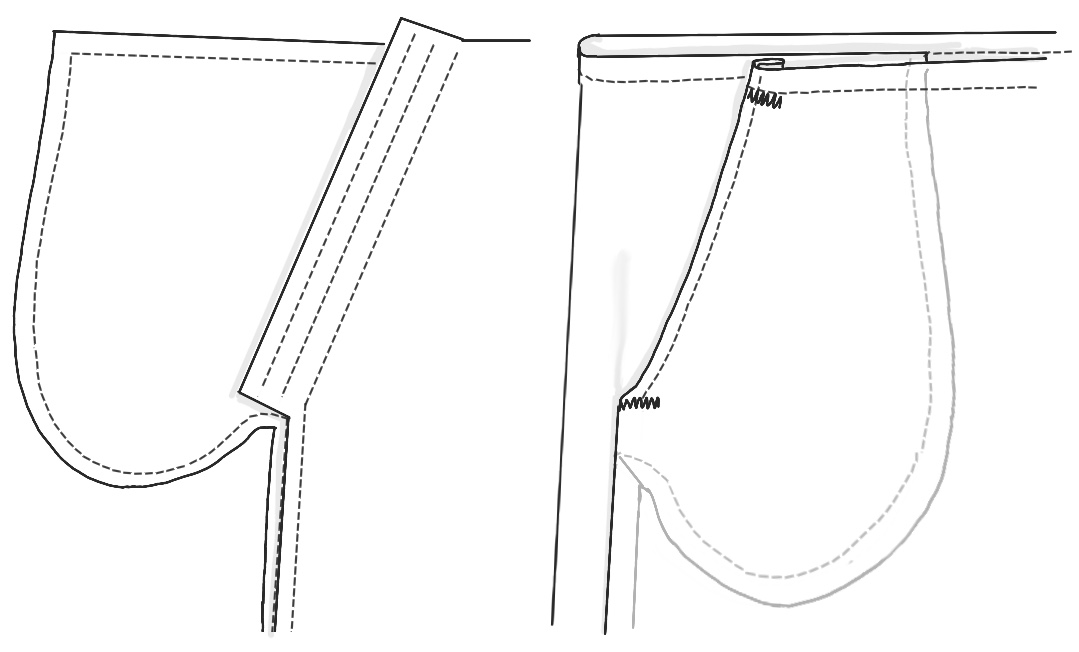
An interesting variation would be to tip the front extension to slant the pocket opening. As slanting the opening gives a longer edge, the lower end of the opening could be higher on the body to reduce things falling out. The back section that wraps to the front does have to be the same fabric, but it could be cut elsewhere in the yardage and seamed on.